


Simonetta Vespucci is most likely one of the crucial painted ladies of the Italian Renaissance. Sandro Botticelli is extensively believed to have used her as his type for Venus, and she or he seems, remodeled and idealised, throughout a number of of his most renowned works.
She died in 1476, elderly simply 23. For hundreds of years, historians have assumed tuberculosis was once in charge – it was once commonplace, it was once regularly deadly, and it fitted the trend of a tender girl fading briefly.
In 2019, my colleagues and I proposed a special rationalization. We tested the portraits attributed to Botticelli along written descriptions from the length, on the lookout for whether or not the similar girl’s face modified in ways in which would possibly mirror an underlying sickness.
What we discovered was once a steady shift in her options throughout more than one artwork – refined adjustments to the jaw, the forehead, the cushy tissue of the face. Those are the type of adjustments observed in sufferers with a pituitary adenoma, a tumour of the small gland on the base of the mind that controls hormone manufacturing.
Particularly, we suspected a tumour secreting each expansion hormone and prolactin. Far more than those hormones can adjust facial contours over the years and, in some instances, purpose surprising lactation – and one allegorical determine in Botticelli’s paintings seems to depict precisely that symptom.
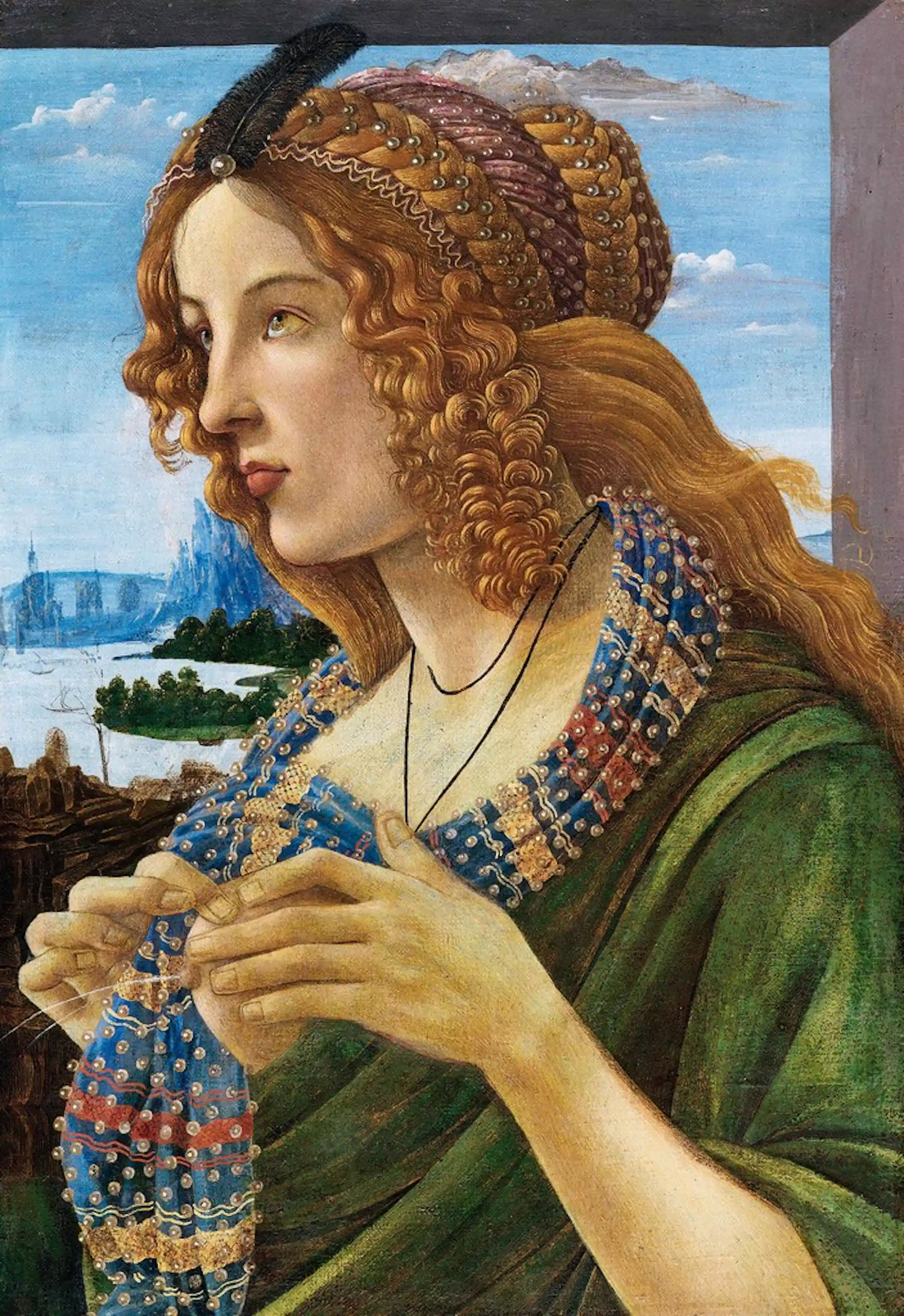
Botticelli’s muse, Simonetta Vespucci.
Wikimedia Commons, CC BY-SA
Our 2019 paper was once wary. We weren’t claiming evidence – we have been providing a believable clinical studying of the visible proof, constructed by means of combining artwork historical past with medical endocrinology.
Now, in a brand new paper printed in Endocrinology, Diabetes and Metabolism, my staff and I’ve long past additional. We consider Simonetta’s dying itself – surprising, speedy, and dramatic in step with recent accounts – is in step with a particular clinical emergency: pituitary tumour apoplexy.
Apoplexy happens when a pituitary tumour bleeds or unexpectedly swells. It usually reasons a surprising and critical headache, lack of imaginative and prescient, confusion, and a swift decline because the frame’s hormonal law collapses.
We argue that this might provide an explanation for one thing that tuberculosis by myself struggles to account for: how a prior to now wholesome younger girl went from obvious wellness to dying inside a brief length. Power infections akin to tuberculosis generally purpose a slower, extra visual decline.
3 strands of proof
Our case rests on 3 strands of proof. First, the bodily adjustments visual around the portraits – Botticelli painted her a number of instances, from the 1470s via to the posthumous Start of Venus (1482–1485) – suggesting a tumour rising over months or years.
2d, the indications described in chronicles of her ultimate sickness (letters exchanged between Piero Vespucci and Lorenzo de’ Medici, describing her cave in at a ball and the complications, hallucinations, vomiting and fever that adopted), which align intently with the medical presentation of apoplexy.
3rd, two documented occasions within the months ahead of her dying – her cave in throughout lively dancing at a ball, and an alleged violent come across with Alfonso II of Aragon, Duke of Calabria – that would plausibly have prompted a bleed or surprising tumour growth.
None of this quantities to walk in the park. There’s no tissue pattern from 1476, no scan, no option to read about Simonetta without delay – simplest artwork, letters, and medical reasoning implemented 5 centuries after the truth.
What we will say is {that a} tumour in a position to slowly reshaping an individual’s face could also be succesful, if it ruptures, of killing them briefly. Put in combination, the portraits and the historic report inform a extra entire tale than both can by myself.
We are hoping this encourages each historians and clinical execs to seem once more at instances like Simonetta’s. Clinical wisdom can once in a while solution questions that natural historic report can not. And, in flip, historic puzzles can push drugs to suppose otherwise about how illness unfolds within the frame over the years.


